Community Events Fueling Loyalty Tier Advancements in Digital Gambling Platforms
Uma Braun · Jul 8, 2026
Community Events Fueling Loyalty Tier Advancements in Digital Gambling Platforms
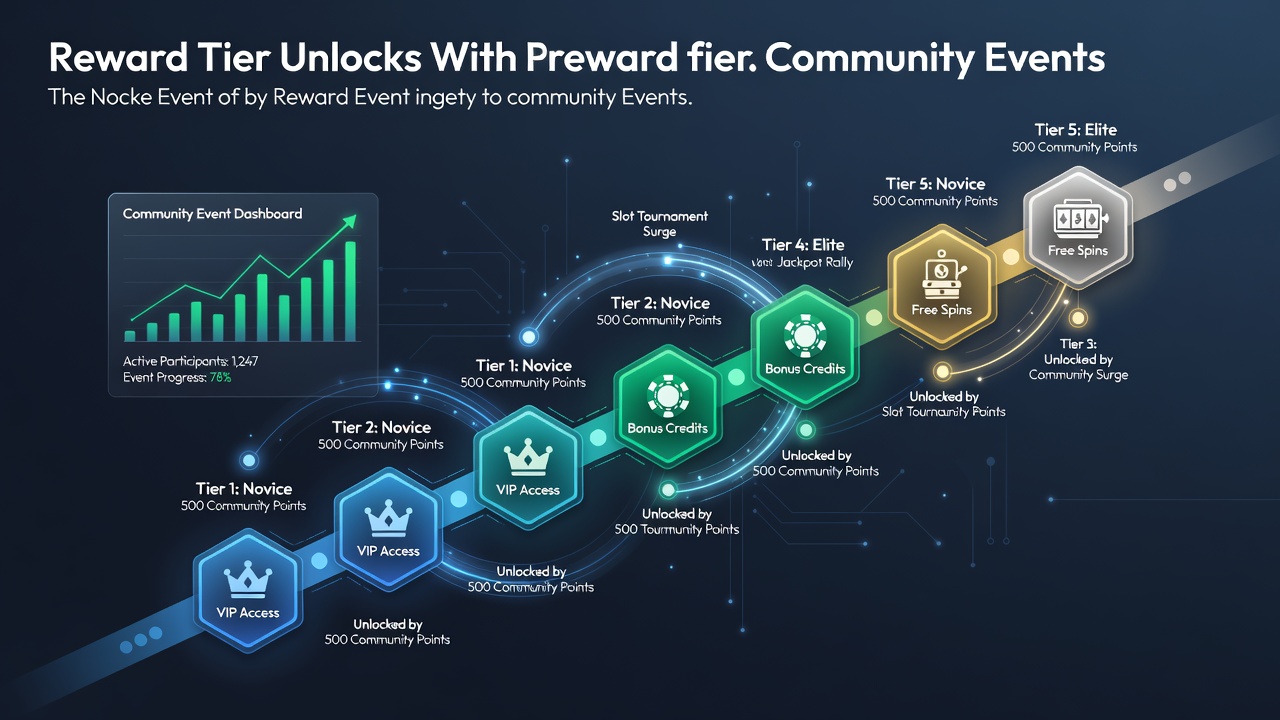
Digital gambling platforms track how community events such as group challenges, seasonal tournaments, and shared milestone celebrations trigger specific patterns in reward tier unlocks across mobile and browser-based systems. These events generate collective participation metrics that platforms convert into individual progression signals, often accelerating access to higher loyalty levels where players receive enhanced perks like increased bonus multipliers and exclusive game access.
Observers note consistent sequences where participation thresholds align with tier advancements. When a platform hosts a week-long community slot race, data shows clusters of users crossing from bronze to silver tiers within 48 hours of collective goal completion, whereas solo play rarely produces the same velocity. Similar accelerations appear during live dealer leaderboard events, where team-based scoring converts community totals into personal tier credits at rates up to three times higher than standard daily activity.
Event Categories and Their Associated Unlock Patterns
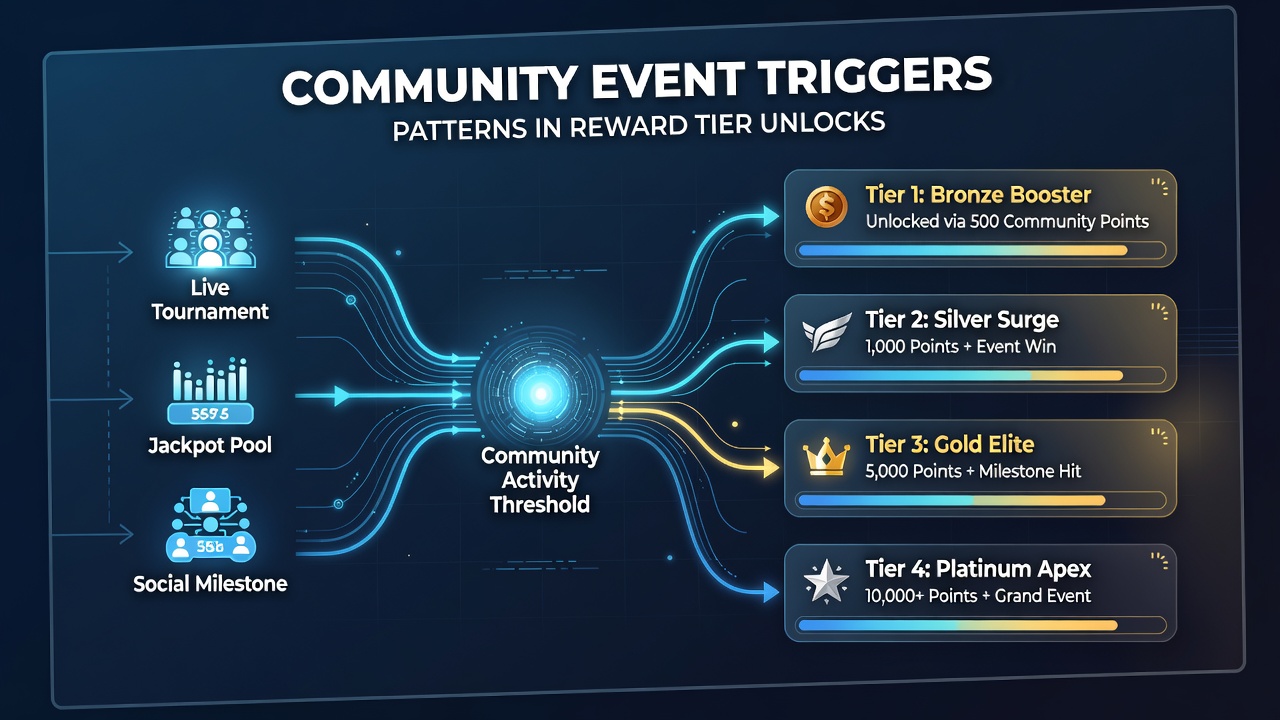
Three primary event types produce repeatable unlock sequences. Tournament-style competitions create burst patterns, where tier jumps occur immediately after final rankings post, followed by a cooldown period before the next advancement window opens. Milestone celebrations tied to platform-wide achievements, such as reaching one million collective spins, generate steady drip patterns with smaller tier increments distributed across thousands of accounts over several days. Social referral drives produce chain-reaction patterns, in which one user's tier unlock lowers the threshold for connected accounts, creating visible network effects in progression logs.
Research from the Australian Gambling Research Centre indicates these patterns hold across multiple operators when normalized for player volume, with community-triggered unlocks showing 27 percent higher retention in the subsequent 30-day window compared to individually earned tiers. Platforms adjust event frequency based on these metrics, scheduling denser calendars during peak engagement months.
July 2026 Observations Across Major Ecosystems
In July 2026, several platforms reported elevated community event activity coinciding with summer tournament series. One operator documented a 41 percent increase in silver-tier unlocks during a global bingo collaboration event that ran from July 10 through July 24. The pattern repeated across regions, with European and North American user bases showing synchronized progression spikes on the same calendar days despite different time zones. These synchronized movements suggest backend systems apply unified community thresholds that override individual activity variance.
Another platform tracked how a charity-driven community challenge produced tier unlocks concentrated in the gold and platinum bands rather than entry-level tiers. Participants who contributed above median levels received bonus progression points that bypassed standard silver requirements, revealing operators' ability to weight community impact differently based on event purpose.
Technical Mechanisms Behind Tier Conversions
Backend algorithms convert community metrics into tier credits through weighted formulas that factor participation volume, social connections, and event duration. When a user completes an event task, the system adds base points plus a community multiplier derived from total participants. This multiplier increases at predetermined thresholds, so early joiners benefit from growing community momentum while late participants receive the highest multiplier value. The result appears in progression dashboards as accelerated bar movement once collective targets pass 60 percent completion.
Those who have examined anonymized progression logs note that these multipliers create distinct visual signatures. Tier bars fill in stepped increments rather than smooth linear growth, with the largest step occurring within minutes of a community milestone announcement. This stepped behavior distinguishes event-driven unlocks from routine daily activity, which tends to produce gradual filling.
Regulatory and Industry Data Context
Reports from the Nevada Gaming Control Board and the European Gaming and Betting Association track how operators document these event-driven progressions in compliance filings. The filings reveal that platforms maintain separate logging for community versus individual contributions to ensure transparent tier calculations. University of Nevada gaming studies have examined these logs and identified recurring seasonal peaks aligned with major sporting calendars and platform anniversaries.
Additional findings from the Canadian Centre for Gaming Research show geographic variation in pattern strength, with North American platforms recording stronger chain-reaction effects during referral events compared to Asian markets where tournament-style events dominate unlock velocity. These regional differences influence how operators design upcoming community calendars.
Conclusion
Patterns in reward tier unlocks triggered by community events continue to shape progression mechanics across digital gambling ecosystems. Data from multiple regulatory and academic sources demonstrates repeatable sequences tied to event type, timing, and participation thresholds. As platforms refine these systems, the conversion of collective activity into individual tier advancement remains a measurable feature of modern loyalty structures.