Spotlighting Regional Variations in Preferred Transaction Options for Online Entertainment Venues
Uma Braun · May 29, 2026
Spotlighting Regional Variations in Preferred Transaction Options for Online Entertainment Venues
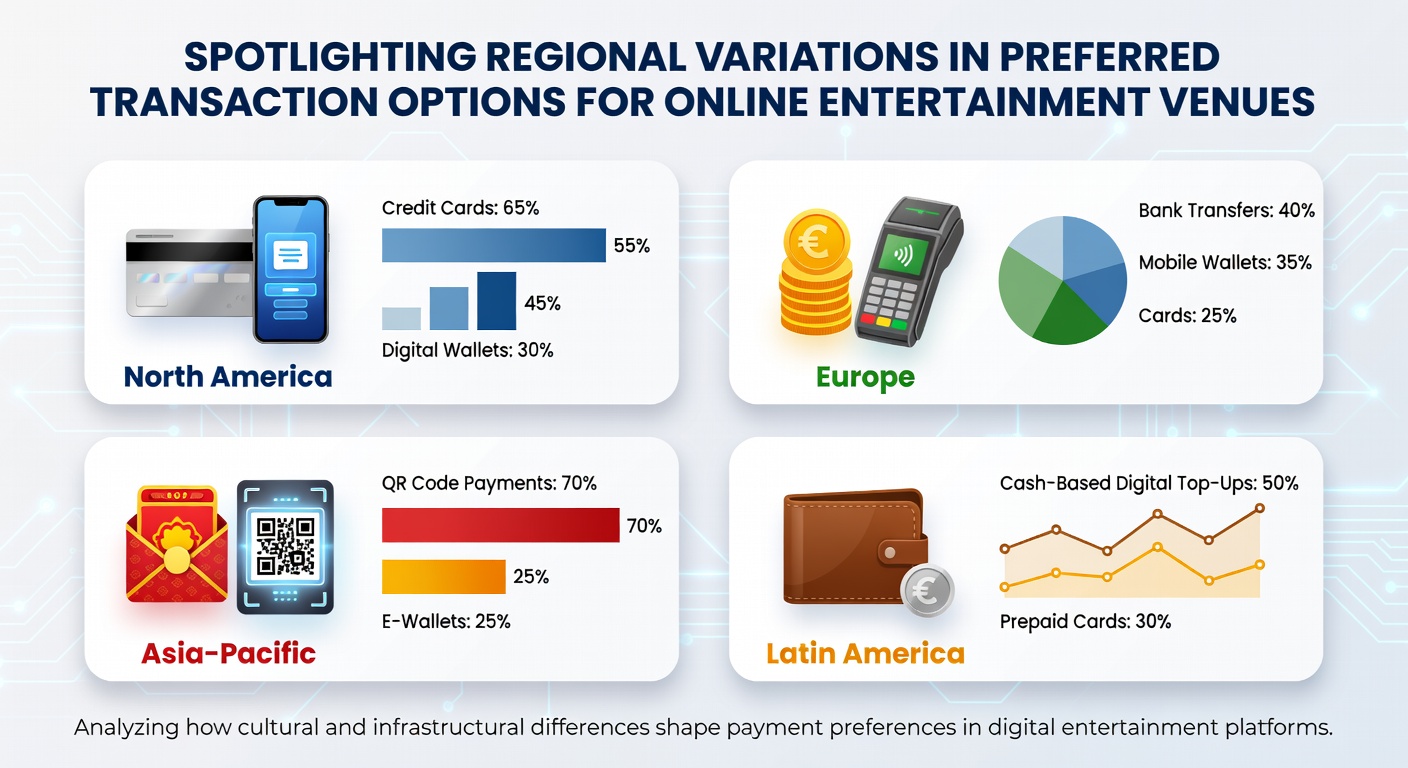
Online entertainment venues operate across diverse regulatory landscapes that shape which transaction options gain traction in each market, and these preferences often reflect local banking infrastructure, consumer habits, and oversight frameworks rather than uniform global patterns. Observers note that payment choices in one region rarely mirror those in another because financial systems, cultural attitudes toward digital transfers, and licensing rules create distinct environments.
North American Transaction Landscapes
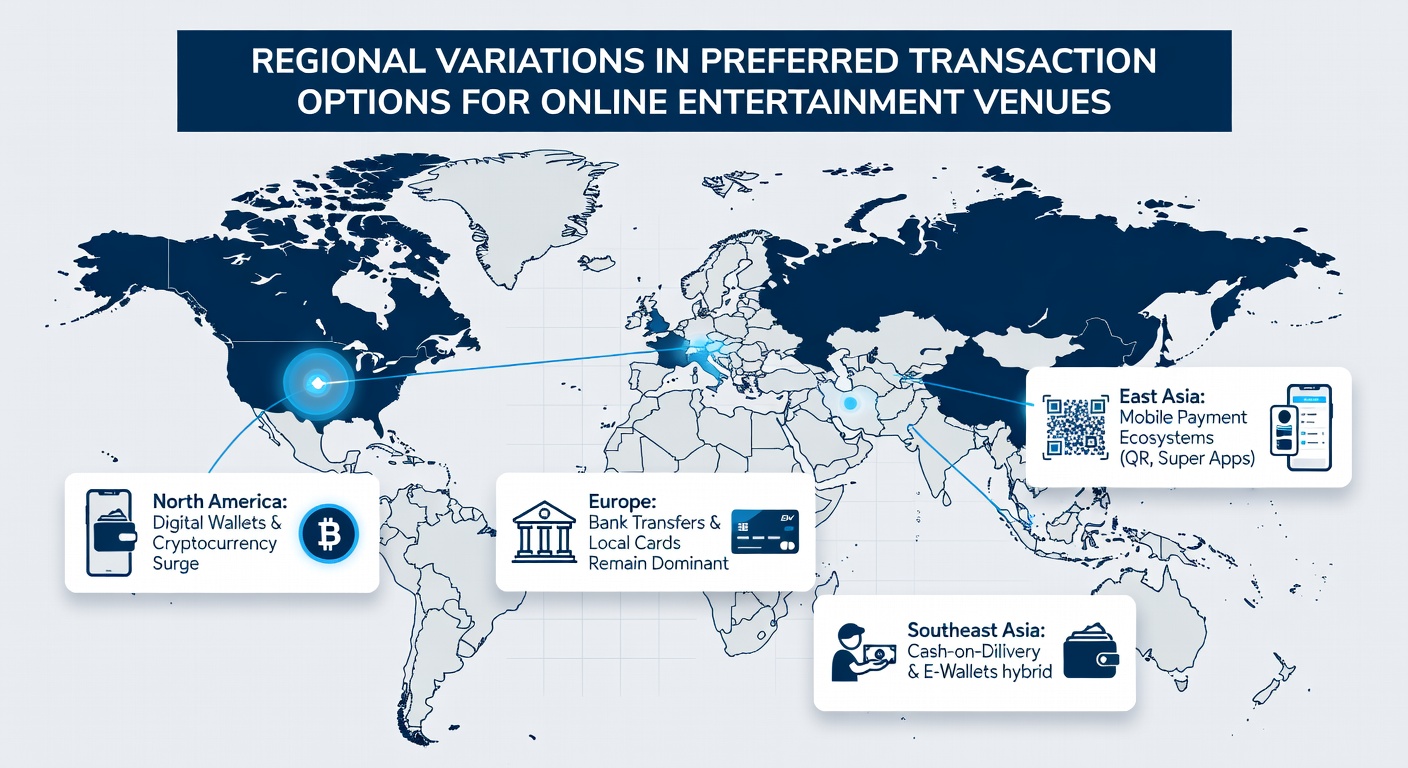
In North America, credit and debit card processing remains widespread yet faces state-level restrictions in the United States while Canadian provinces such as Ontario permit a broader mix that includes direct bank transfers through Interac and emerging digital wallet integrations. Data from the American Gaming Association shows that ACH transfers and prepaid vouchers account for substantial volumes in regulated markets where operators must comply with strict know-your-customer protocols. Meanwhile, certain U.S. jurisdictions have seen gradual adoption of cryptocurrency options for deposits, although acceptance varies sharply depending on whether state gaming boards have issued explicit guidance on virtual asset handling.
European Payment Preferences and Regulatory Nuances
European markets display further fragmentation because each country maintains its own licensing regime that influences acceptable funding methods. In Germany and the Netherlands, for instance, operators emphasize local bank transfers and e-wallets that comply with anti-money laundering directives, whereas Scandinavian countries often feature instant bank payment solutions tied directly to national banking apps. Research conducted by the European Gaming and Betting Association indicates that PayPal and similar services enjoy high usage rates in several member states due to established consumer trust and streamlined dispute resolution processes. Yet in Southern Europe, cash voucher systems and prepaid cards continue to serve segments of the market where traditional banking penetration remains lower.
Asia-Pacific Regional Distinctions
Across Asia-Pacific territories, preferred transaction methods diverge even more noticeably because local financial ecosystems prioritize different infrastructure. Singapore and Japan lean toward credit card and bank wire combinations under tight regulatory oversight, while Australia incorporates POLi and BPAY systems that allow direct account-to-account movement without exposing card details. A 2025 report issued by the Australian Institute of Criminology documented that these locally developed instant payment rails handle a growing share of entertainment venue deposits because they reduce processing delays and align with existing consumer banking routines. In contrast, several Southeast Asian markets rely heavily on mobile wallet ecosystems such as GrabPay or local equivalents that integrate seamlessly with everyday digital spending patterns.
Influencing Factors Behind Payment Choices
Regulatory changes, banking partnerships, and technological adoption rates collectively drive these regional differences. When governments update licensing conditions or introduce new consumer protection measures, operators adjust their supported transaction lists accordingly, often favoring methods that already meet verification standards. Banking policies also play a decisive role because some institutions decline to process gambling-related transfers while others establish dedicated channels that speed up settlement. Observers tracking market data note that regions with high smartphone penetration tend to accelerate adoption of app-based solutions, whereas markets with robust cash economies maintain demand for voucher and prepaid card alternatives.
Developments Observed Through May 2026
By May 2026, several markets had introduced updated guidelines on digital asset usage and faster payment rails, prompting operators to expand or restrict certain options depending on jurisdiction. Industry reports compiled during this period highlight continued growth in instant bank transfer volumes across multiple continents, while card processing volumes stabilized or declined in territories that imposed additional verification layers. Cross-border operators must therefore maintain region-specific payment portfolios to remain compliant and accessible to local users.
Conclusion
Regional variations in transaction preferences for online entertainment venues stem from the interplay of regulation, infrastructure, and user behavior rather than any single dominant trend. Those who monitor these markets recognize that payment ecosystems evolve alongside policy shifts and technological capabilities, requiring ongoing adaptation by venue operators to meet localized expectations. Understanding these differences provides clearer insight into how global platforms navigate diverse financial environments while remaining functional across borders.